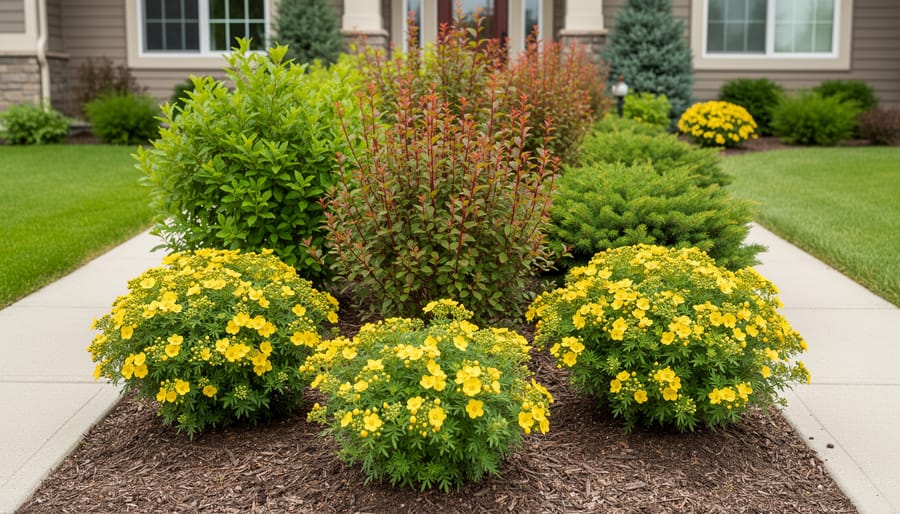
The right shrubs transform an empty yard into a polished, layered landscape without breaking your back or your budget. For Edmonton homeowners, that means choosing tough, proven performers that handle our zone 3 winters, look great across three seasons (or even four), and don’t demand constant fussing. This guide spotlights eight reliable, locally available shrubs that nurseries stock year after year because they simply work.
These aren’t exotic specimens that sulk through our summers or collapse at the first hard freeze. They’re the workhorses: Potentilla for non-stop blooms, Red Twig Dogwood for winter structure, Caragana for wind protection, and five others that consistently earn their place in northern gardens. Each thrives as part of the plants as living systems that anchor your property, offering practical benefits like privacy screening, seasonal color, and habitat for pollinators.
As a family-owned garden care team serving Edmonton and the surrounding area, we’ve planted, pruned, and maintained these shrubs in hundreds of yards. We know which ones actually deliver on their promises and which need babying. The list below reflects real-world performance, not catalog hype. You’ll find clear planting guidance, care basics, and what each shrub does best, so you can match the right plant to the right spot and build a landscape that rewards you year after year.
How We Chose These Shrubs
We didn’t just pick these shrubs because they look good in a catalog. After more than two decades planting, pruning, and tending gardens across Edmonton, Beaumont, and Saint Albert, we’ve seen what actually thrives here and what ends up disappointing homeowners a year or two down the road.
Every shrub on this list meets strict real-world criteria:
- Hardy to zone 3 or better, surviving Edmonton’s coldest winters without coddling
- Low-maintenance once established, requiring minimal fussing or specialized care
- Year-round visual interest, whether through evergreen structure, winter stems, or seasonal blooms
- Readily available at local nurseries, so you’re not hunting for rare varieties
- Proven performers in actual Edmonton yards, not just experimental possibilities
As a family-owned business, we’ve built relationships with hundreds of local homeowners over the years. We’ve watched their gardens evolve through harsh springs, dry summers, and brutal winters. These eight shrubs are the ones we return to again and again because they deliver on their promises. They’re the workhorses that make our clients happy and keep their landscapes looking great with reasonable effort. That hands-on experience matters more than any textbook recommendation.
1. Potentilla (Shrubby Cinquefoil), Non-Stop Summer Blooms
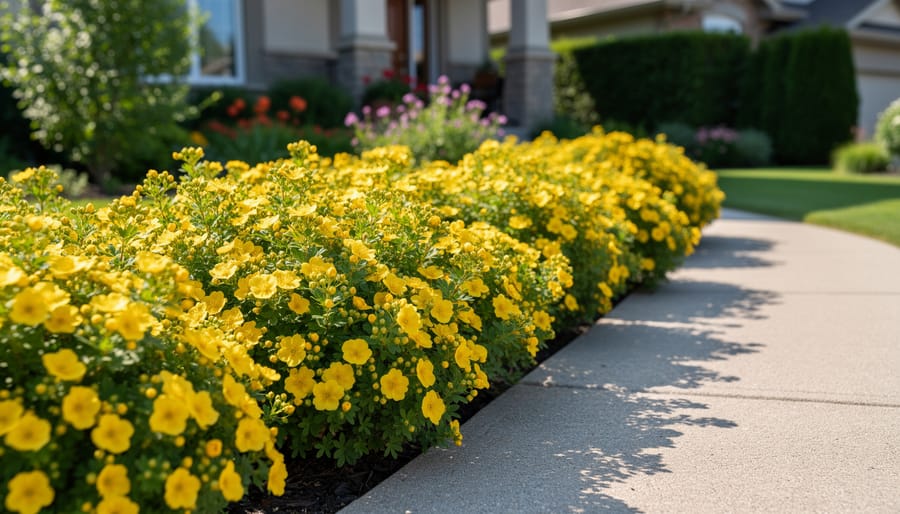
If you want color that lasts all summer without babysitting, Potentilla is your shrub. This compact flowering workhorse blooms from June straight through September, covering itself in cheerful yellow, white, or pink flowers while most other shrubs have already finished their show.
We’ve planted hundreds of Potentillas across Edmonton over the years, and they consistently deliver. They stay small, usually maxing out around three feet tall and wide, which makes them perfect for tucking along walkways, edging flower beds, or anchoring foundation plantings without blocking windows. Their fine-textured foliage and tidy mounding habit look good even when they’re not in bloom.
What really sets Potentilla apart is how forgiving it is. Once established (usually by the end of the first growing season), it handles drought beautifully. It thrives in full sun, tolerates our clay soil without complaint, and survives Alberta winters without protection. You won’t need to fuss with complicated pruning schedules either. A light trim in early spring to remove any dead tips is all it asks.
For beginners especially, Potentilla builds confidence. It’s genuinely hard to kill, rewards you with months of color, and doesn’t demand constant attention. Plant a few along a sunny border, water them regularly the first season, then step back and let them do their thing. You’ll have reliable blooms every summer for years.
2. Spirea, Elegant Shape, Easy Care
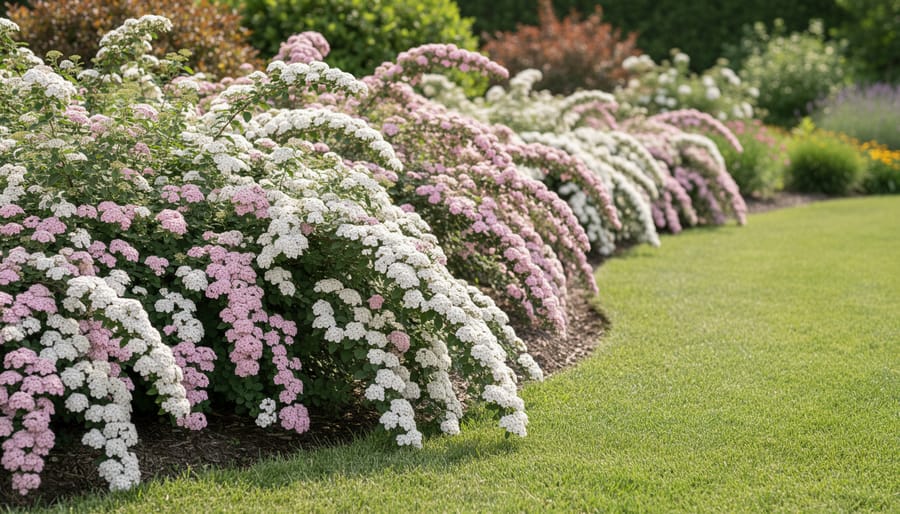
Spirea earns its place on nearly every landscaping plan we draft. This deciduous shrub offers something most plants can’t match: a tidy, mounded shape that looks intentional even when you’re not fussing over it. In spring or early summer (depending on the variety), clusters of tiny white, pink, or red flowers blanket the branches. Come fall, the foliage shifts to warm bronze, orange, or burgundy tones that carry visual interest right up to the first snow.
For Edmonton yards, we recommend compact varieties that won’t outgrow their space. ‘Goldflame’ spirea starts spring with bright yellow-gold new growth, blooms deep pink in June, and finishes autumn in fiery red-orange. It tops out around three feet, making it perfect for front borders or flanking walkways. ‘Little Princess’ stays even smaller, roughly two feet tall, with soft pink blooms and a neat, rounded habit that suits foundation beds or edging along patios.
Spirea thrives in our zone 3 climate without coddling. Plant it in full sun for the best flowering and fall color, though it tolerates a bit of shade. Once established, it handles drought well and adapts to most soil types, including our common clay. The only maintenance it asks for is light annual pruning: trim spring-bloomers right after flowering, or cut summer-bloomers back in early spring. A quick shearing keeps the shape tidy and encourages fresh growth.
We love spirea for creating soft, flowing transitions between garden beds and lawn. It’s forgiving, reliable, and genuinely pretty across three seasons.
3. Dwarf Mugo Pine, Evergreen Structure Year-Round
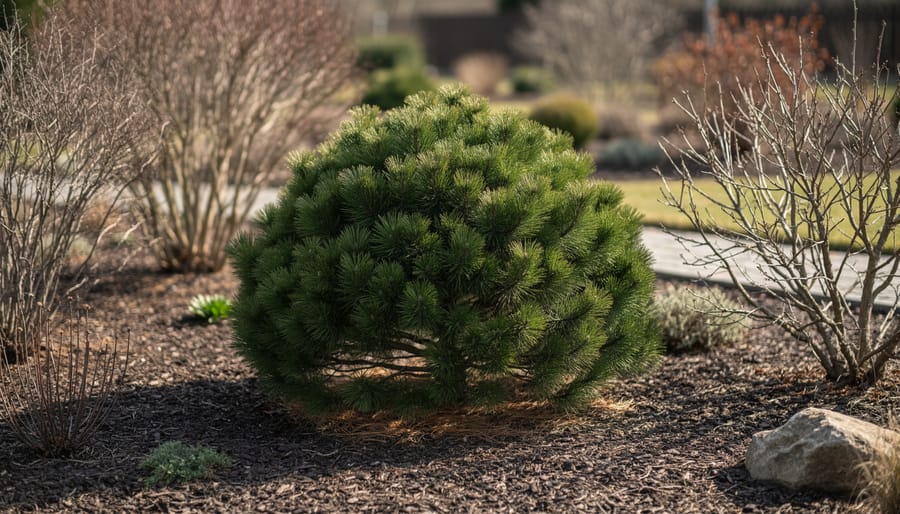
When deciduous shrubs drop their leaves in October, dwarf mugo pine keeps your landscape looking intentional all winter long. This compact evergreen is exactly what Edmonton yards need when everything else goes dormant, it holds its deep green color through -40°C temperatures and looks just as good under a foot of snow as it does in July.
Dwarf mugo pine (Pinus mugo var. pumilio) grows slowly into a dense, rounded mound, typically reaching 3-4 feet tall and wide over 10-15 years. That predictable growth habit makes it perfect for those tricky spots where you need something that won’t outgrow its space, foundation corners, entry flanks, or formal garden anchors. We’ve planted dozens around Beaumont homes where homeowners want year-round structure without the commitment of a large evergreen.
The “virtually no maintenance” claim isn’t marketing speak. Once established, these shrubs need no pruning, tolerate poor soil, and shrug off drought. Deer ignore them. Disease and pests rarely bother them. The needles stay dense without any effort on your part, creating a tidy, architectural presence that grounds your entire planting scheme.
One practical tip: Give mugo pine afternoon shade if possible. Full western sun in July can occasionally stress young plants, though mature specimens handle it fine. Pair them with red twig dogwood or spirea for a contrast that works across all four seasons, the pine provides the steady backbone while deciduous partners bring seasonal flair.
4. Dogwood (Red Twig or Yellow Twig), Winter Color Heroes
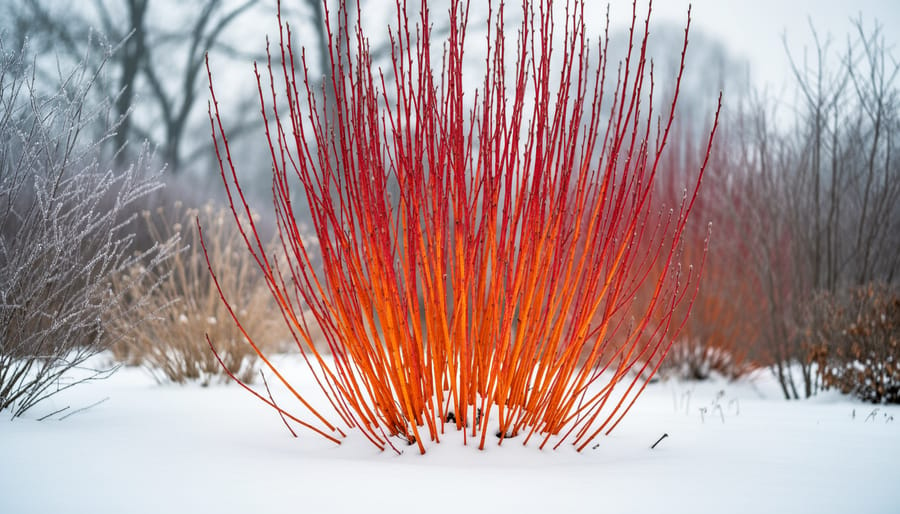
If you want a shrub that earns its keep in the dead of winter, dogwood is your answer. While other plants fade into the background under January snow, red twig and yellow twig dogwoods put on their best show, those bright, glowing stems stand out like brushstrokes against a white canvas. We’ve planted hundreds of these across Edmonton, and homeowners always tell us they can’t believe how much color they bring to an otherwise dormant landscape.
Dogwoods grow fast, which means you won’t wait years to fill in a corner or screen an unsightly fence. They’re adaptable, too. Got a boggy spot near a downspout? Dogwood handles it. Drier corner by the driveway? No problem. They’re genuinely tough in Edmonton’s climate, our winters don’t faze them. The real magic happens when the leaves drop in fall and those vibrant stems take center stage. Red twig varieties glow crimson, yellow twig types shine chartreuse-gold, and both look stunning in clusters or as accents near evergreens.
Here’s the trick to keeping them vibrant: prune out about a third of the oldest stems every two or three years in early spring. The youngest growth produces the brightest color, so this simple renewal keeps them looking sharp. It’s not fussy work, just cut older, duller stems down to the base and let the plant push out fresh, colorful growth. We’ve found that neglected dogwoods still survive just fine, but a little attention keeps them spectacular.
5. Juniper, Tough, Textured, and Timeless
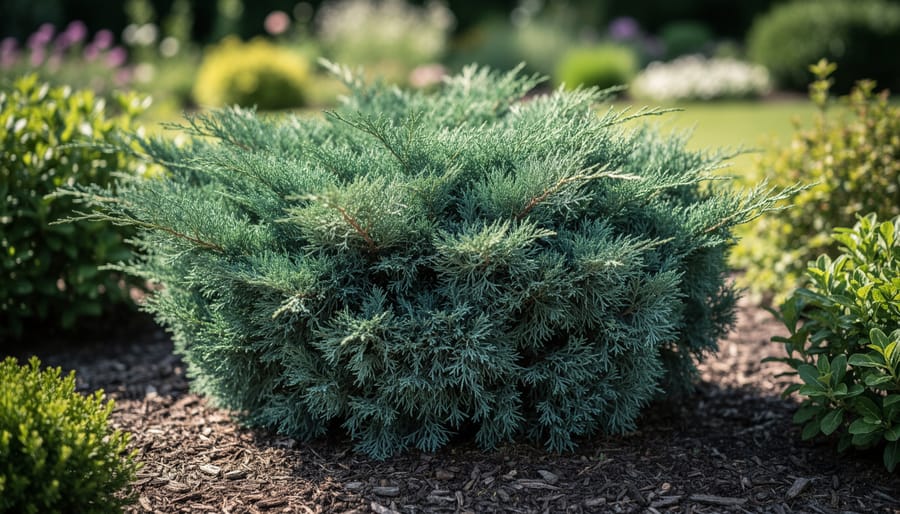
Juniper has earned its place in Edmonton landscapes through sheer toughness. Once established, it can handle drought, cold snaps, and clay soil without complaint. That resilience makes it a go-to choice for homeowners who want year-round color but don’t have time for fussy maintenance.
The blue-green foliage adds instant texture and visual interest, especially when you pair it with plants that have warmer tones or softer leaves. Varieties like ‘Blue Chip’ work beautifully as groundcovers, spreading low and wide to suppress weeds and fill awkward slopes. ‘Wichita Blue’ grows more upright, making it ideal for corners, foundation plantings, or creating layers in mixed borders. Both hold their color through winter when most of the garden fades to brown.
Junipers don’t demand much once their roots settle in. Water regularly for the first growing season, then step back. They’re naturally drought-tolerant and prefer drier conditions to constantly wet soil. Occasional shaping in late spring keeps them looking tidy and prevents them from crowding neighboring plants, but you won’t be wrestling with rapid overgrowth.
We’ve planted countless junipers across Beaumont and Saint Albert, and they consistently deliver. They anchor winter landscapes, provide evergreen structure when deciduous shrubs go bare, and require almost no intervention year after year. If you want reliable, textured greenery that doesn’t quit, juniper delivers.
6. Lilac, Classic Fragrance and Spring Beauty
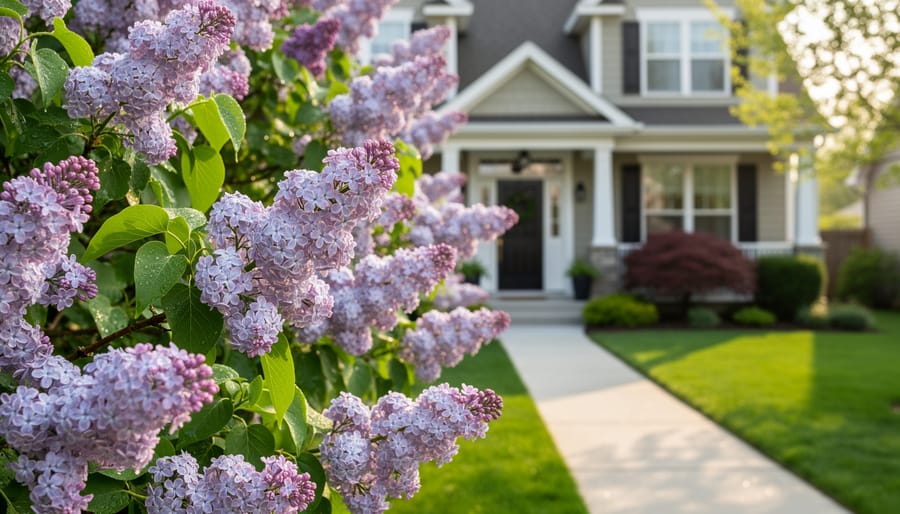
Walk past any older Edmonton home in late May, and you’ll catch the scent before you see the source: a towering lilac hedge in full, fragrant bloom. This is the shrub that defined spring for generations, and it still earns a place in modern yards for good reason.
Lilacs are workhorses for our climate. They shrug off -40°C winters, tolerate our alkaline clay soil, and live for decades with minimal fuss. The common purple lilac (Syringa vulgaris) grows 8 to 15 feet tall and wide, while dwarf varieties like ‘Tinkerbelle’ and ‘Bloomerang’ stay under 6 feet, perfect for tighter spaces or foundation plantings. Blooms range from deep purple to white, with some varieties reblooming lightly in late summer.
Plant lilacs in full sun for the best flower show. They need well-drained soil but aren’t picky beyond that. Water regularly the first season, then let nature take over, they’re drought-tolerant once established. The key to abundant blooms year after year is renewal pruning: every three to four years, cut one-third of the oldest stems to the ground right after flowering. This keeps the shrub vigorous and prevents the scraggly, bloom-shy look of neglected specimens.
If you grew up with lilac bushes in your yard, this one’s nostalgia in plant form. If you didn’t, it’s a fragrant introduction to what Alberta gardening is all about.
7. Ninebark, Bold Foliage, Native Toughness
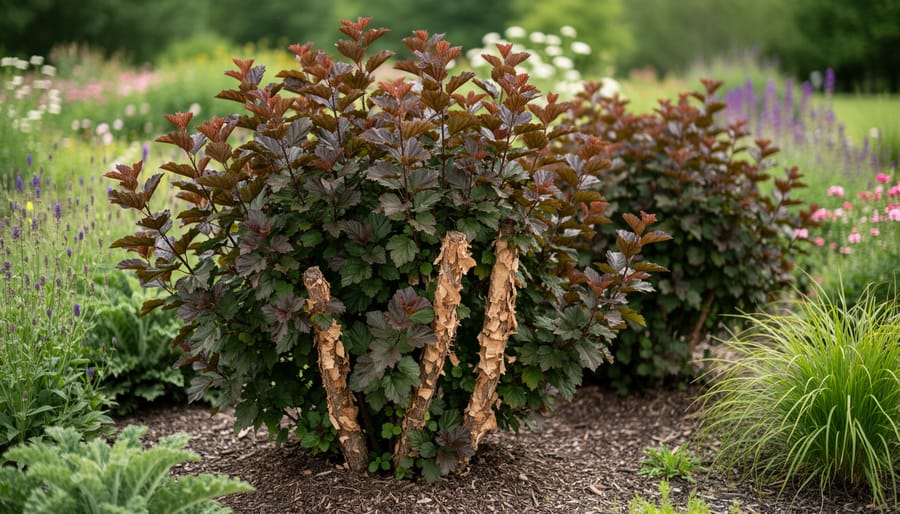
Ninebark deserves a spot in every Edmonton yard looking for drama without the fuss. This Alberta native shrub brings bold burgundy or chartreuse foliage that holds its color from spring through fall, plus clusters of white or pale pink flowers in early summer and distinctive peeling bark that adds winter interest. Varieties like ‘Diablo’ showcase deep purple leaves, while ‘Dart’s Gold’ lights up shaded corners with bright chartreuse foliage that doesn’t scorch in our intense sun.
What makes ninebark a standout for local landscapes is its ability to handle our toughest conditions. Clay soil, sporadic watering, temperature swings, it takes them all in stride. Once established, ninebark needs minimal supplemental water, making it ideal for naturalized areas or low-maintenance borders. The shrub typically reaches 5-8 feet tall and wide, though compact cultivars stay closer to 4 feet, fitting smaller yards beautifully.
Plant ninebark in full sun to part shade for the best foliage color. It pairs exceptionally well with other native plants and adds textural contrast when planted alongside evergreens like juniper or mugo pine. Pruning is straightforward: remove older stems at the base every few years to encourage fresh growth and maintain shape. For larger limbs, the 3-cut pruning method prevents bark tearing and keeps the plant healthy.
8. Caragana (Siberian Peashrub), The Ultimate Windbreak
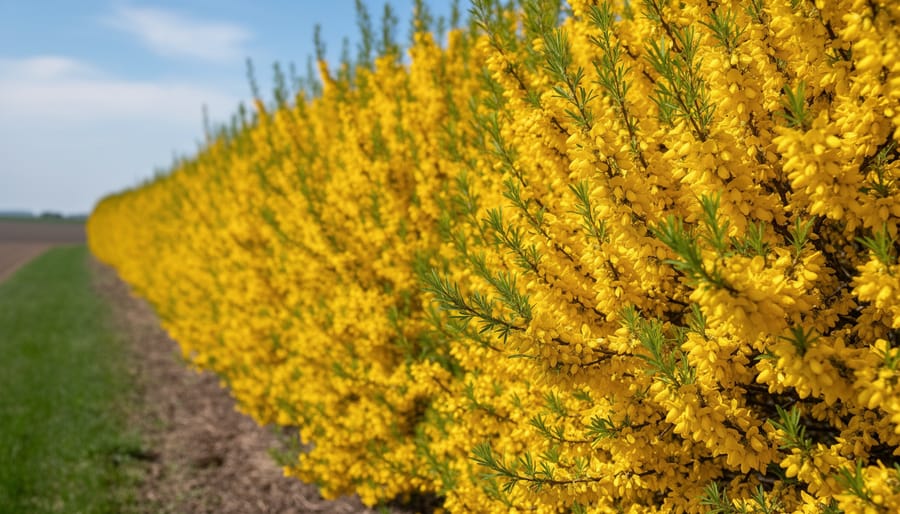
If you need a shrub that can handle absolutely anything Alberta throws at it, Caragana is your answer. We’ve planted these across farm properties, acreages, and even urban yards where nothing else survived, and they just keep going.
Caragana grows fast, often 2 to 3 feet per year when young, making it ideal when you need privacy or wind protection quickly. The bright yellow pea-like flowers arrive in May, adding a cheerful splash before the heat of summer. But honestly, most people plant Caragana for its legendary toughness, not its blooms.
This shrub laughs at poor soil, scorching sun, prairie winds, and temperatures well below -40°C. It fixes nitrogen in the soil, actually improving the ground around it. Left unpruned, it forms a dense, naturalized screen 10 to 15 feet tall. Prune it regularly following tree pruning guidelines and you can shape it into a neat formal hedge. Understanding the different types of pruning cuts helps you control its vigorous growth and keep it looking sharp.
Caragana does spread by suckers if you let it, so plan accordingly. We often plant it along property lines, driveways, or as windbreaks for vegetable gardens. It won’t win beauty contests, but for sheer reliability and function in harsh conditions, Caragana is unbeatable.
Tips for Planting and Caring for Your Shrubs
Getting your shrubs off to a strong start makes all the difference. In Edmonton, plant in late April through May or mid-August to early September, this gives roots time to settle before winter or summer stress hits. Before you dig, loosen the soil and mix in compost to improve drainage and nutrients, especially if you’re dealing with our heavy clay. The planting hole should be twice as wide as the root ball but no deeper, and backfill gently to avoid air pockets.
Water deeply once or twice a week during the first growing season, adjusting for rainfall. A 2-3 inch layer of mulch around the base (but not touching the stems) keeps moisture in, moderates soil temperature, and cuts down on weeds. Once established, most of these shrubs are low-maintenance, but annual pruning or shaping keeps them looking their best and encourages healthy growth. If you’re not sure when or how to prune, or you’d rather leave the heavy lifting to someone else, Edmonton expert care from our team ensures your shrubs thrive year after year without the guesswork.
Common Questions About Landscaping Shrubs
When you’ve spent over two decades planting shrubs across Edmonton, you hear the same smart questions over and over. Here are the answers that’ll save you headaches and help your new shrubs thrive.
When is the best time to plant shrubs in Edmonton?
Spring (late April through May) and early fall (late August through September) are ideal. Spring planting gives shrubs a full growing season to establish roots before winter, while fall’s cooler temperatures reduce transplant stress and autumn rains do most of the watering work for you.
How much spacing do shrubs need?
Check the mature width on the plant tag and space shrubs at least that far apart, center to center. For a quicker hedge effect with Caragana or Spirea, you can cheat spacing by about 25%, but know you’ll be doing more thinning and pruning down the road.
Can I mix evergreen and deciduous shrubs?
Absolutely, and we recommend it. Pairing evergreens like Dwarf Mugo Pine or Juniper with deciduous options like Dogwood or Ninebark gives you structure in winter and seasonal color shifts the rest of the year.
How often should shrubs be pruned?
Most need light shaping once a year. Spirea and Potentilla benefit from early spring trimming, while Dogwood looks best when you remove the oldest stems every two to three years to keep those winter colors vibrant.
Do I need to fertilize shrubs?
Not usually. A two-inch layer of compost or mulch applied each spring provides enough nutrients for established shrubs in Edmonton’s clay-based soils. Save fertilizer for container plants or shrubs showing clear deficiency symptoms like yellowing leaves.
The truth is, shrubs are more forgiving than most people think. Get them in the ground at the right time with decent soil prep, water them consistently through their first season, and they’ll reward you for years with minimal fussing.
Choosing the right shrubs transforms your Edmonton yard from flat and forgettable to vibrant and inviting, no matter the season. These eight proven performers deliver year-round beauty, low-maintenance structure, and genuine curb appeal without demanding expert-level care. You don’t need to tackle all eight at once. Start with two or three favorites that match your yard’s conditions and your personal style, then build your landscape over time as your confidence grows.
We’ve spent 21 years working alongside Edmonton homeowners, helping families create outdoor spaces they’re proud of. Whether you’re looking for hands-on planting help, a landscape design that fits your lifestyle, or seasonal pruning and maintenance to keep your shrubs looking their best, we’re here to support you. Mosai Gardening Services isn’t just about getting the job done. It’s about building relationships, understanding what matters to you, and keeping your garden thriving for years to come. Reach out anytime you have questions or need a hand. We’d love to help your yard reach its full potential.